



China’s Factory Prices Grow for First Time Since 2022 as Oil Shock Increases Input Costs
China’s producer prices rose in March for the first time in more than three years, ending a long deflationary run as a sharp jump in global oil prices rippled through industrial supply chains. Consumer inflation, however, cooled from the prior month, underscoring that the economy is still contending with uneven demand even as upstream cost pressures build.
Official data showed the producer price index rose 0.5% year over year, the first year-over-year gain since September 2022. For the first quarter as a whole, producer prices were still down 0.6%, highlighting that the return to positive territory is recent and heavily influenced by the latest energy shock.
On the consumer side, the CPI rose 1% in March from a year earlier, below market expectations and down from February’s 1.3% reading. Core inflation, which strips out food and energy, rose 1.1%, suggesting underlying price momentum remains contained even as headline categories react to commodity moves.
Oil shock reshapes the inflation mix
The key driver behind the swing in factory gate prices has been energy. The conflict involving the United States and Iran has disrupted oil flows and tightened global supply, pushing crude benchmarks sharply higher. For an economy that remains a large net importer of oil, the immediate risk is that higher fuel costs feed into transport, chemicals, and broader industrial inputs.
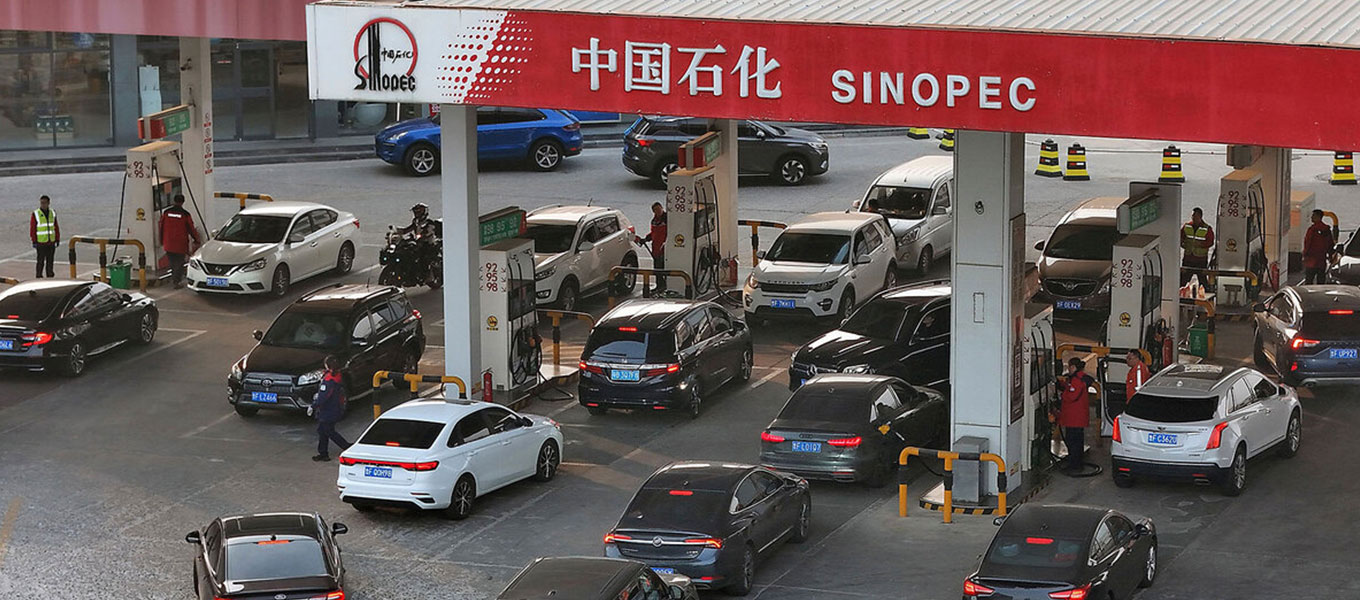
China has more buffers than most. Large strategic stockpiles and a diversified energy mix can soften the initial impact. Even so, policymakers are already allowing higher retail fuel prices. The economic planning agency raised gasoline and diesel prices again this week, following larger increases last month. Gasoline prices also rose sharply month over month in March, even as authorities sought to limit the full pass-through to consumers.
That balance is delicate. If retail prices are capped too aggressively, pressure shifts to refiners and distributors. If prices are allowed to rise quickly, household budgets and consumer confidence can take a hit. For now, the data show upstream pressure is rising faster than downstream inflation.
Cost-push inflation risk for manufacturers
The return of producer price growth is not an unqualified positive. A move from deflation to inflation can support revenues in some sectors, but if it is driven primarily by energy and imported inputs, it can squeeze margins, particularly for manufacturers that have limited pricing power.
China’s recent profit dynamics amplify that concern. Industrial profits rose strongly in the first two months of the year as authorities tried to reduce overcapacity and rein in extreme price competition. A renewed upswing in input costs could threaten that improvement by forcing firms to absorb higher raw material and fuel prices, especially if demand is not strong enough to support broad-based price increases.
One indicator of this pressure is that purchasing prices for raw materials, fuel, and power increased faster than factory-gate prices, suggesting that input inflation is running ahead of output pricing. If that gap persists, profitability may come under renewed strain even as headline producer prices look healthier.
Policy implications remain mixed
Consumer inflation remains below the 2% level that policymakers often view as consistent with stable growth, and the moderation in March supports the argument that demand is not overheating. At the same time, an oil-driven cost shock can create an uncomfortable policy mix, with higher prices stemming from supply disruptions rather than stronger domestic activity.
That leaves policymakers balancing competing risks. They need to limit the spillover from higher energy costs into inflation expectations while avoiding an excessive hit to growth. With inflation still moderate, some economists argue that monetary policy could remain supportive, but a prolonged energy shock would complicate that stance.
China’s government bond market has not shown a dramatic reaction so far. The 10-year yield has held relatively steady, suggesting investors are still treating the shock as manageable, at least for now.
What to watch next
The next phase will hinge on three variables.
First, the path of oil prices and whether supply conditions normalize.
Second, how much of the upstream cost increase is passed through to consumers through fuel, transport, and utilities.
Third, whether manufacturers can pass on higher input costs without reigniting price wars or losing demand.
March’s data marks a turning point in producer prices, but the composition matters. A return to positive factory gate inflation driven by an external oil shock may improve the headline, yet still leave China facing a tougher margin environment and a more complicated policy tradeoff in the months ahead.